
40 Buyers From Five Countries Lost Money on One Punta Cana Project — Here's the Checklist That Would Have Stopped It
By the UpHoming Research Team ·
Buying ProcessThree 2026 Dominican fraud cases — West Side, Guepardo, Novasco — share one pattern. Here's the due-diligence checklist that protects foreign buyers before they pay.
40 Buyers From Five Countries Lost Money on One Punta Cana Project — Here's the Checklist That Would Have Stopped It
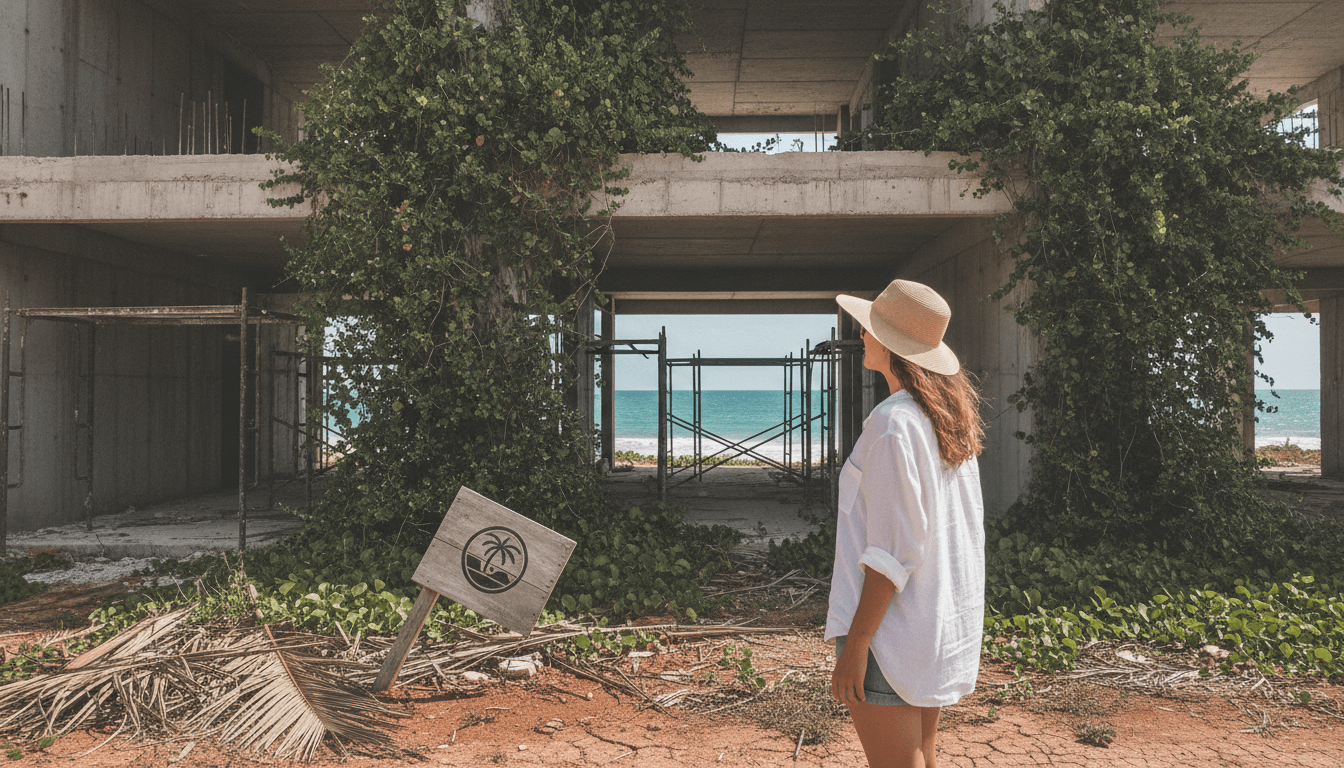
In March 2026, more than 40 people — from the Dominican Republic, the United States, Mexico, Chile and Bulgaria — filed complaints saying they had paid into a Punta Cana villa project called West Side Residences and ended up with neither the home nor a refund. It is not an isolated story. And the thread that ties it to two other 2026 cases is simple enough that you can protect yourself in an afternoon.
The good news for anyone buying from Toronto, Madrid or New York: none of these victims were unlucky. They were unprotected. The same handful of checks would have caught all three schemes before any money moved.
What actually happened in these three cases
Three separate cases reached Dominican authorities in early 2026, and they rhyme.
West Side Residences (Grupo Paceo). Buyers signed an option-to-purchase contract for villas, then — according to the complaints — were asked for additional payments that were never in the signed agreement, along with amendments that kept pushing the delivery date back. Some were later asked to sign withdrawal agreements promising refunds that allegedly never arrived. More than 40 victims across five countries have filed complaints, and in March 2026 they formally asked that the case move to PEPCA, the prosecutor's specialized anti-corruption unit (Ensegundos / Ministerio Público, March 2026).
The Guepardo case (Novasco and three others). Pro Consumidor, the national consumer-protection agency, sent 46 case files to the prosecutor in La Romana involving four linked companies — Novasco Real Estate, RR Marketing Group, Rodeca Marketing Group and RE/MAX One. The scheme, regulators say, advertised properties on social media and collected wire transfers from buyers in the Dominican Republic, the United States, Puerto Rico and Europe (Pro Consumidor, February 2026). The point of 46 files is scale: this was not one bad actor, it was a repeatable system.
Different names, different towns. Same machinery.
The one pattern that connects all three
Strip away the brand names and the common denominator is an order of operations, not a company. In every case, money left the buyer's hands before the property's legal status was independently verified, and it traveled outside the four corners of a signed contract.
That is the tell. A legitimate Dominican purchase is built so that every dollar you pay is named in your contract and held somewhere you can audit. The moment someone asks for a payment that isn't written into the agreement — a "reservation top-up," an "expedite fee," a cash amendment to keep your unit — you have left the protected path, no matter how polished the project looks.
What this means for you: the checklist before you wire a single dollar
You do not need to be a lawyer to run these six steps. You need to run them before the first transfer, not after.
- Pull the Certificación del Estado Jurídico del Inmueble. This single document, issued by the Registro de Títulos under Law 108-05, shows the property's true owner, any mortgages, liens or active disputes. It is the most important piece of paper in the whole process — request it before you sign anything.
- Match the name on the title to the name on your contract. If the person or company selling to you is not the registered owner, stop. This one check would have flagged the social-media listings in the Guepardo case.
- Hire your own attorney — not the developer's. Expect to pay roughly 1–1.5% of the purchase price for independent legal review. On a US$250,000 condo that is about $3,000: cheap insurance against losing the whole $250,000.
- Refuse any payment that isn't written into the contract. Every peso or dollar you owe should appear, by amount and date, in the contrato de opción de compra. The "additional payments" at the center of the West Side complaints were, by definition, off-contract. If you are asked for one, that is your exit cue.
- Put your money in a regulated escrow, not a personal account. Funds wired to an individual's bank account are gone the instant they land. Funds held by a licensed fiduciary are not.
- Confirm the 3% transfer tax is actually being filed at the DGII. Every legitimate Dominican purchase pays a 3% transfer tax to the tax authority — on a $250,000 property, that's $7,500. Fraudulent deals skip it because there is no real transfer to register. Ask to see it filed; it is a red flag you can verify yourself.
The thing the existing coverage misses
Every outlet has covered West Side, Guepardo and Novasco as three separate scandals. They are not three problems — they are one problem wearing three names.
So your defense is not "pick a trustworthy developer." Trust is not a control you can audit. The real protection is structural: never let your money leave your control until two things are true at the same time — the legal-status certificate comes back clean, and the funds sit with a regulated fiduciary rather than in someone's personal account. The Dominican Republic has a purpose-built tool for exactly this, the fideicomiso under Law 189-11, which holds buyer funds in a separate, supervised structure. If you anchor on the order of operations instead of on the developer's reputation, the three cases above simply cannot happen to you.
How we sourced this
The case details come from Ensegundos and the Ministerio Público (March 2026), Pro Consumidor (February 2026), and the Registro Inmobiliario, with the 3% transfer tax confirmed through the DGII framework. All figures were collected in May–June 2026. One caveat: these cases are open. The companies named have been accused, not convicted, and we describe the complaints on record — not court verdicts.
If you want the deeper version of step one, our guide to legal due diligence and title verification walks through reading a Certificación line by line, and our fiduciary services overview explains how a Law 189-11 trust holds your money safely until closing. Run the six checks first; pay second.
This article is based on data from Ensegundos / Ministerio Público, Pro Consumidor, El Nuevo Diario, the Registro Inmobiliario, and the DGII, collected March–June 2026. Last updated: 2026-06-12.
Keep reading

Santiago to Puerto Plata in 23 Minutes: What a $538 Million Highway Means for North Coast Property Values
July 7, 2026

3.7 Million Visitors, $13 Billion in Bank Commitments: What the Dominican Republic's Record Q1 2026 Means for Pre-Construction Buyers
July 1, 2026
On the DR's North Coast, a Beach Condo Pays You Back 6–10% a Year — and Sells in Half the Time of a Villa
June 23, 2026